When Bots Hire Bots: How AI Is Breaking the Job Market
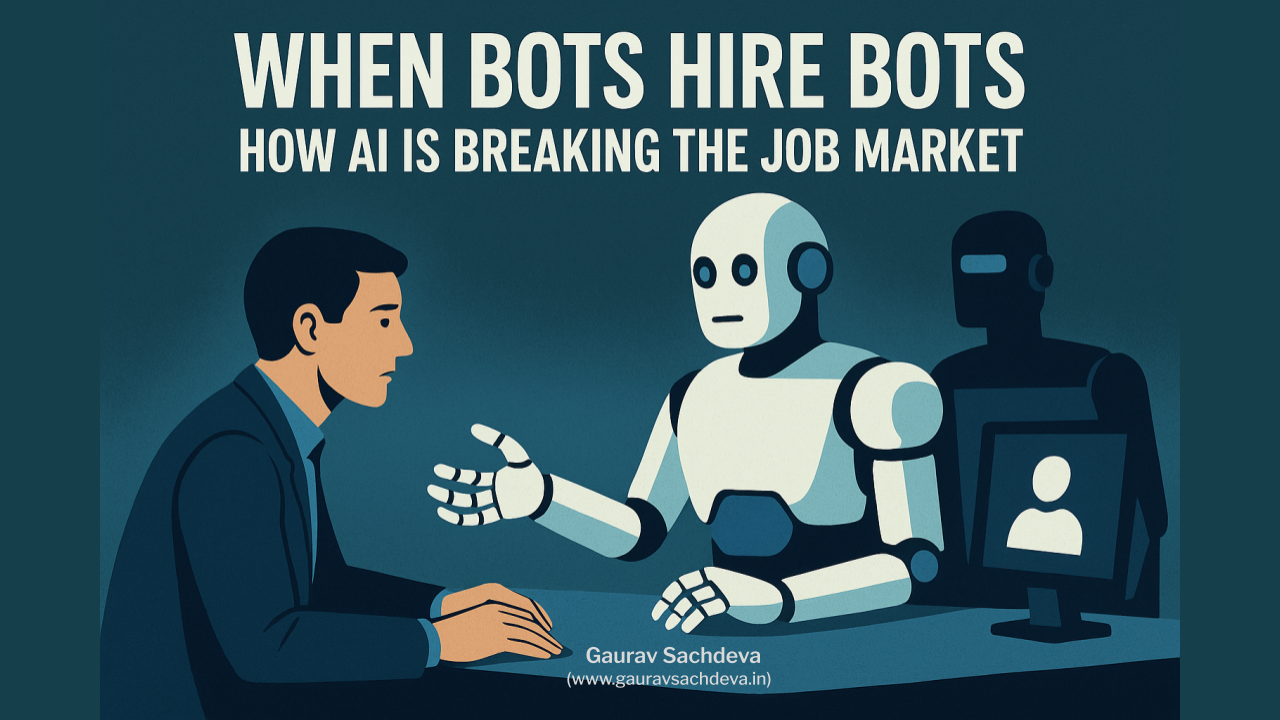
The job market has always had its challenges, but today it feels less like a career journey and more like a digital obstacle course. On one side, companies are overwhelmed by thousands of applications and rely on algorithms to do the heavy lifting. On the other side, applicants are turning to AI-powered tools to generate resumes, cover letters, and even responses to interview questions. Cover letters aren’t always written by people—they’re drafted by AI tools. And in some cases, applicants are even interviewed by chatbots before they meet a real human.
What used to be a human-to-human interaction is now more like a bot-to-bot conversation—and it’s leaving both employers and job seekers frustrated. Let’s break down how this shift happened, what it means, and where it might take us.
Recruiters Leaning on Algorithms
Companies are flooded with hundreds, sometimes thousands, of applications for a single role. To deal with this, recruiters have turned to Applicant Tracking Systems (ATS). These systems scan resumes for keywords, filter out “unqualified” applicants, and push only the top matches to human recruiters.
The issue? These systems often prioritize the “right words” over real skills. An experienced professional could be overlooked simply because they didn’t use the exact phrasing the algorithm is looking for.
Applicants Fighting Fire with Fire
Job seekers aren’t sitting quietly, either. They are now leaning towards creating ATS friendly resumes, and some websites even give scores to resumes. They’re responding with AI-powered resumes, cover letters, and even automated job application bots. Instead of spending hours writing custom applications, many now use tools that can generate polished documents in seconds. Some even run scripts that apply to dozens of jobs at once.
The result? Recruiters are overwhelmed with AI-generated content, much of it indistinguishable from one applicant to the next.
The Strange Reality: AI Talking to AI
We’re already seeing the oddest scenario play out:
- Applicants use AI to create their resumes.
- Recruiters use AI to filter and shortlist candidates.
- Interviews are conducted by automated chatbots.
In some cases, a candidate may never actually speak to a human being until the very last stage—or not at all. That means machines are essentially making hiring decisions about people.
Why This Hurts Everyone
This isn’t just inconvenient; it’s harmful:
- For applicants: The process feels dehumanizing and frustrating. Hours of effort can vanish into a digital void without any feedback.
- For recruiters: They’re buried in piles of nearly identical applications, making it harder to identify genuine talent.
- For companies: They risk hiring based on who writes the best “AI-friendly” resume instead of who actually has the best skills.
At the end of the day, efficiency is replacing authenticity—and both sides lose.
So, What’s the Fix?
While we can’t roll back the clock on technology, we can use it more thoughtfully.
- Recruiters should balance automation with a personal review of applicants, even if it means sampling a portion of resumes manually.
- Applicants should treat AI as a tool for support, not as a complete replacement for their voice and individuality.
- Companies need to rethink their hiring strategies, remembering that work is fundamentally about people working with people—not bots negotiating with bots.
Final Words
The rise of AI in recruiting isn’t all bad—it brings speed and efficiency. But somewhere along the way, the heart of hiring got lost. Jobs are about people, not just polished keywords or automated interviews.
As the market continues to evolve, the real advantage won’t come from having the smartest bot on your side—it will come from showing what makes you genuinely human in a system crowded with algorithms.